

The Success Insight
Don’t Agree

The Success Insight
Don’t Agree
A client recently tuned up for a coaching session with a big bandage taped to his forehead.
I politely enquired. He explained that he had fallen and hit his head in the night. Needing a few stitches, he’d spent most of the night at the hospital. His voice was clearly groggy from the trauma, lack of sleep, and heavy narcotics.
“Are you ok to continue with the session?”
“These sessions are sacrosanct!” he responded.
I have strong agreements with my clients. One of those agreements is that coaching time on the calendar is a guarded space. We don’t cancel on each other unless either of us experiences a genuine emergency.

Agreeableness vs. Agreements
When you were a little boy or a little girl, it is likely you were taught to nod your head and say ‘yes’ whenever anyone asked for your agreement.
Most children are taught to keep their opinions to themselves.
Agreeableness is often viewed as a polite, compassionate, and likeable virtue.
Agreeable people like to be liked.
What if I told you that agreeable people are likeable for reasons you wouldn’t want?
Agreeableness is a personality dimension. It is often difficult to understand because it is closely associated with neuroticism.
Most sane and rational people go to great lengths to avoid displaying behaviour that might be viewed as neurotic.
Recent studies from Professors at top Universities – including Cambridge & Cornell – have observed that agreeable people earn less than their disagreeable peers. Quite a bit less.
Being overly agreeable is hurting you in many ways…
- People take advantage of you.
- You avoid uncomfortable conversations.
- You fail to set boundaries that lead to missed opportunities.
- You don’t take a stand when faced with dishonesty or insincerity.
- You hold on to frustration and carry it with you.
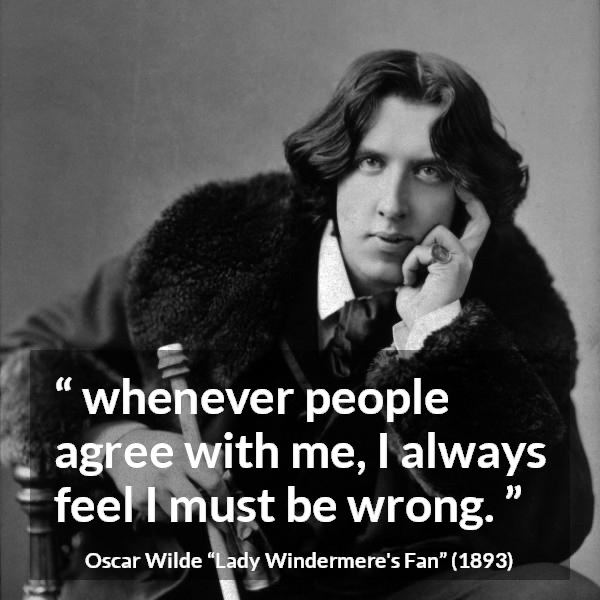
The Dilemma You Face
Being overly agreeable is holding you back.
AND, you also want to avoid becoming the biggest neurotic A-hole the world has ever witnessed.
So, how do you practice being less agreeable, and stay on the right side of the neurotic scale?
Let’s use an example…
A client/colleague/associate has requested to move a call with you at the last minute. There is no emergency. No reason they ‘can’t’ make the call. Something has come up.
You’ve gone to great lengths to accommodate this call. You rearranged family plans because your client/colleague/associate specifically requested to talk to you. Now, it’s too late for you to reverse your plans.
Your instinct is to appease the request. You want so badly to respond with “No problem. Let’s reschedule.” And yet you know by agreeing, by not taking a stand, it will eat at you for the remainder of the evening.
Your commute home will be consumed by thoughts of the selfishness of this person. You’ll beat yourself up for being such a pushover, and question why people always take advantage of you. The event has consumed sacred space in you head.
When you arrive home you have very little patience for your family. You’re not able to be fully present with them. You don’t understand what’s eating at you.

The Disagreeable Tactic
Instead of subjecting yourself to the mental and emotional torture I described above, practice being disagreeable. (Just like any new skill, it takes practice.)
Here are three steps you can follow whenever you are called to disagree…
- Pause
- Lead
- Resolve
I’ll explain each of these in more detail.
Firstly, do nothing. Don’t believe every thought you have. Your instinctive reaction may be missing some essential facts. Responding quickly does not give you time to regulate your emotional system. Any words you say won’t be properly thought through. You will only further inflame the situation…. AND you’ll feel even worse.
Secondly, be the leader you aspire to be, or the leader you wish you had. Put yourself in the shoes of the other person. In the example above, they might not know how important it is for you to keep the scheduled time. They may not know what you have sacrificed. Treat them with the respect you would want if you were in their position.
Once you’ve taken some time to think the situation through, you’re in a much better place to lead. You’re convinced the right thing to do is push back. It’s important to set the stage correctly.
If the reschedule request came via email, I might respond with something brief like, “Please call me.” Most people will call relatively quickly when they want something from you.
If the reschedule request was made on a call, or face to face (both unlikely) ask them, “can we take a few minutes to discuss this?”
In the example used, it is most likely the request would be delivered in writing. The cold nature of the request is what initially raised your suspicion.
In other situations, you will find yourself on a call, or in a meeting. It’s important you don’t skip the first step. Don’t forget to pause. There is more time than you realise to slow things down.
If you’re on a call, it’s ok to be silent. Tell the other person you need a minute to think.
If you’re in a meeting, you can always go back once you’ve given yourself time to reflect. “I’d like to revisit something you said a few minutes ago.”
Lead the situation. Respect other people. Control your emotions.
Thirdly, resolve the situation.
Make sure to gather all the facts. In the example above, begin by asking something like, “help me understand why you need to postpone our call?”
Allow for the fact that they might have a very valid reason. There might be a family emergency. They might be sick. Injured. Depressed. Suicidal.
You’re satisfied there is no immediate emergency. Now is your chance to speak up and not get pushed into something you don’t agree to. Explain to the person that you’d like to keep the call as scheduled. Share with them the sacrifices you have made to accommodate this call. Tell them you’ve not heard anything that warrants postponing the call, and you’d like them to honour the time.
Something to consider is that most people are reasonable. Most people.
Once you have explained your position calmly, rationally and respectfully. Once you have allowed them an opportunity to express their reasons.
You will find that, when people are respected, they become incredibly agreeable.
P.S. If you’re wondering what happened with my client who showed up for a session with a bandage on his head, we rescheduled. Most reasonable people would agree that a blow to the head requiring stitches counts as an emergency. And, I was in awe of his commitment to honour our agreement.