

The Success Insight
Do you have Skills?

The Success Insight
Do you have Skills?
When I was in school we were taught ‘traditional skills’ – reading, writing and mathematics.
As we got a little older, Science was introduced as a mandatory subject. There was also the opportunity to study humanities – history, geography, languages, religion, and the arts – although they were never perceived as equally valuable.
Looking back, being able to read, write, and understand basic maths have proven to be invaluable skills. They helped me to get a job and perform to a the required standard.
In 2005 I landed my first ‘proper’ job for a big software company. The interview was short. “You have a college degree; you can hold a conversation. That’s all I really need to know,” my new boss told me.
If I were in my early twenties today, and looking to begin a career, I’m certain the same qualifications would not carry as much weight.
Receiving an undergraduate degree no longer guarantees a job (certainly not a career). Not as it did 20, 30, or 40 years ago. Degrees have become commodities. Employers in many industries have realised the talent pool is just as great among non-graduates.
The World is Transcending
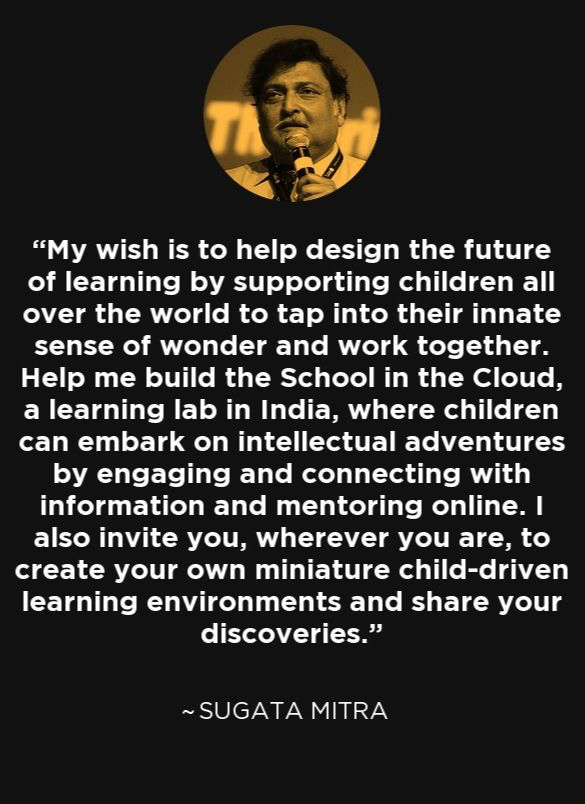
Sugata Mitra is an educator who won the TED Prize for his vision School in the Cloud in 2013. He is credited with more than 25 inventions in the area of cognitive science and education technology.
He observed the way we teach our children is outdated. He was asked during a talk, “what do we need to stop teaching our children?”
He replied…
“Stop teaching spelling.”
“Stop teaching maths.”
“Because our kids are going to have a back-up brain in their pocket. Why teach them skills that were needed in 1970?”
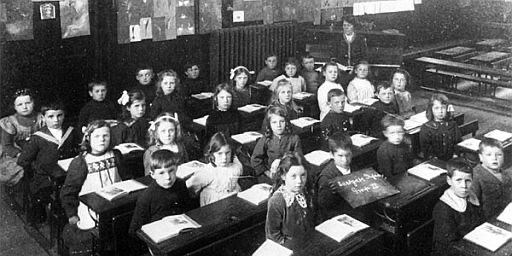
The present-day education system has been in place for about 300 years. The Victorians engineered a systems that was able to transcend the globe without computers, and without telephones.
What they built needed be carried around the world on ships with handwritten data on sheets of paper. They created a system that is known as ‘the bureaucratic administration machine.’
It was a system that relied upon people that were taught skills that made them identical to each other. These identical people had to be able to do three things…
- They must have good handwriting.
- They must be able to read.
- And they must be able to perform basic addition, subtraction, multiplication and division in their head.
Nothing is broken with the existing education system. It is so robust, that a system created 300 years ago, is still effective today.
The difference today is that we live in an entirely new world. The British Empire has long since ended.
The machine that the Victorians engineered a robust system for, no longer exists.
Today, almost every human on the planet carries a personal computer with Artificial Intelligence in their pocket.
We have a back-up brain.
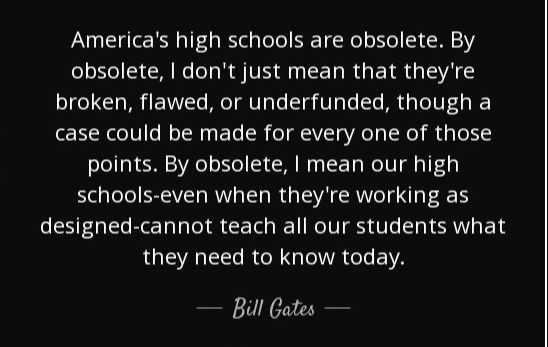
The school, as we know it, is obsolete. We don’t need it anymore.
What Skills Should we be Learning?
We often hear from our politicians that our education system is broken, outdated, or that it is a waste of money. The point they make is entirely valid.
I’ve yet to be convinced any of them know how to replace it with a relevant system.
I hear many ideas of how they will re-engineer the existing system by adding tests at different ages, change scoring systems, or by making advanced mathematics compulsory until a certain age.
All of those ideas – which are often debated at great length – miss the point.
Our schools need an entirely new system.
The World Economic Forum’s 2025 Future of Jobs Report included a feature on the ‘Core Skills’ that are most in demand by employers. These are the key priority areas for workforce development for organisations.
In that report reading, writing and mathematics are skills considered to be ‘out of focus’. That is true today and will not change looking ahead to 2030.
Traditional skills such as teaching, marketing, programming, and languages are also deemed to be ‘out of focus’.
The core skills in highest demand today are…
- Analytical thinking
- Resilience, flexibility, and agility
- Leadership and social influence
- Creative thinking
- Motivation and self-awareness
Not a single education system in the developed world has yet to prioritise the development of these skills. For most of us, a five-minute pep-talk from a parent was the extent of our education on subjects like resilience and motivation.
Looking forward to 2030, the expectation is that ‘AI and big data’ will be a highly desired skill.
Tellingly, all the core skills listed above are predicted to still be in high demand in 2030. As will ‘curiosity and lifelong learning’ as well as ‘empathy and active listening’.

The Take Away
We are in the midst of a global transformation. In the past such monumental shifts have been labelled as renaissances, revolutions, or new era’s.
The downside of living through the dawn of a new era, is that you don’t get to see how it plays out. You’re not able to read the entire story.
It’s easy to get weighed down by much of the negativity that exists in today’s media. It’s understandable to imagine that some of the short-term, backward looking, or divisive rhetoric you hear will become the new normal.
The new world will not be shaped by the desires of two or three ‘strong men’. Neither will it be created to benefit only a small handful of wealthy oligarchs. We’ve experienced freedom for way too long to accept a life of silent repression.
The world will become what you and I create. The influence of regular people to shape the world has never been greater. There might be some temporary pain. We might need to sacrifice more than we can ever remember.
There are so many reasons to feel optimistic today.
Will a new education system arrive that supports the interconnected needs of today’s world? More than likely. When? One day, soon. How? I’m not sure.
Until it does, we know the core skills we need to be investing in. Both for ourselves and our children. These are unlikely to change in the next 10-15 years. And the opportunities to learn and practice these skills are freely available.
If you’re willing to invest in the core skills most in demand, you give yourself an enormous chance of thriving in this world. That is true no matter what.
In the words of Sugata Mitra, “I invite you, wherever you are, to create your own miniature child-driven learning environments and share your discoveries.”