

The Success Insight
Goldfish Memory

The Success Insight
Goldfish Memory
Lately I’ve become a bigger and bigger user of YouTube.
According to research performed by GMI, 2.7 billion people use YouTube every month. It seems I’m not alone.
I use it to catch up on news stories, and for watching longer format educational videos and podcast episodes.
More recently I use YouTube to keep my daughter entertained with nursery rhymes. It’s a tactic I use sparingly for emergency meltdowns.
There’s a decent supply of good quality material to be found on YouTube. And there’s a load of rubbish. You need to patient enough to sift through the garbage, and the annoying advertisements.

Short Attention Spans
Like all social media platforms, YouTube offers what they call ‘Shorts’. These are smaller samples – often just a few seconds – taken from a larger video. The idea is to entice the viewer without losing our attention.
It’s well known that the average human attention span has gradually decreased over time.
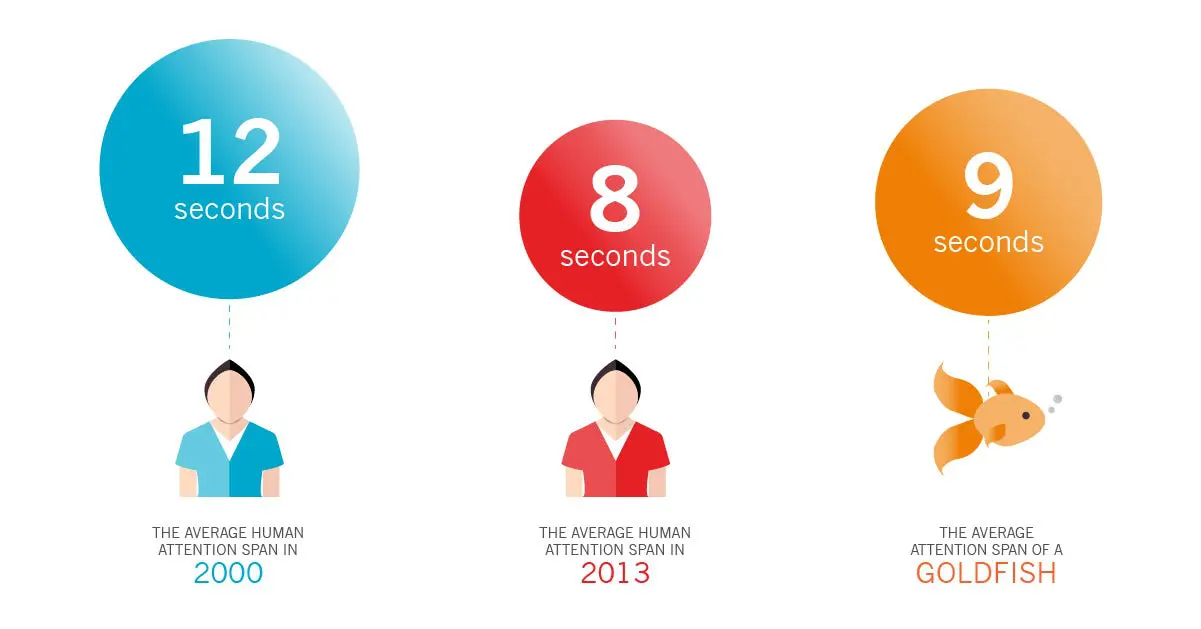
In 2000 the average attention span was 12 seconds. Today, it is estimated to be 8 seconds, which is apparently one second worse than a goldfish.
Whether or not the calculation or the comparison is accurate, it’s difficult to disagree with the fact that our attention spans are dwindling.
Patience is certainly not in vogue today. We are a species addicted to instant gratification.
Not for Everything
It turns out our attention span is not ‘short’ for everything we choose to do.
For ‘good stuff’ our attention spans are fine. We will happily spend hours of our time indulging material and shows that we enjoy.
Recent studies suggest that attention spans are actually increasing in certain scenarios. This increase flies in the face of all prevailing wisdom.
Attention span is not static. It is a muscle. Like any muscle in the body, you can practice making it stronger.
The question you might be asking is, how?
The answer is found in the hours of programming you will gladly sit and watch for fun i.e. it is not painful or taxing in any way.
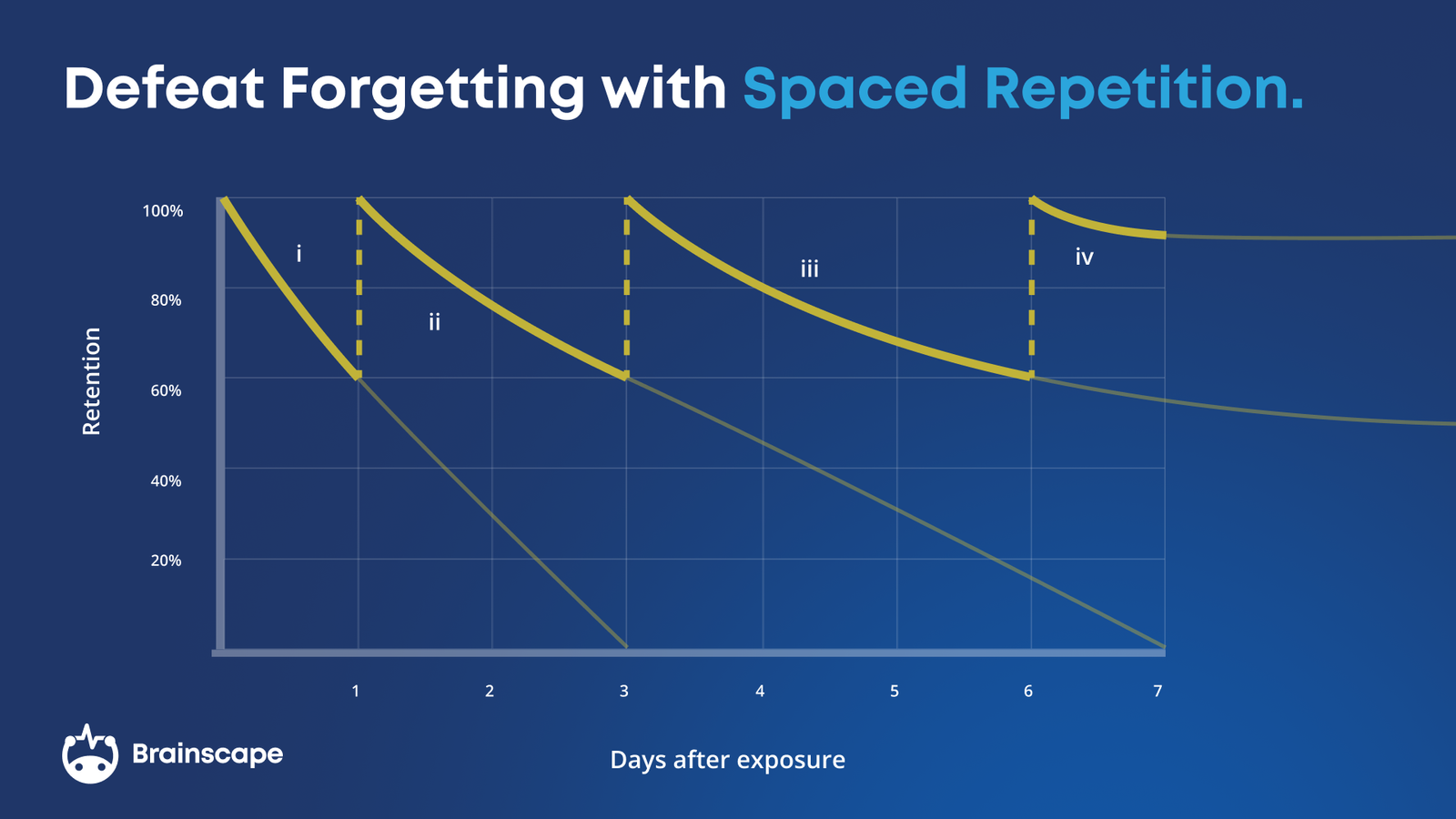
The more scientific answer is known as Spaced Repetition.
Spaced Repetition requires your repeated exposure to concepts based upon how well you understand them.
If the learning becomes too difficult i.e. painful and taxing, your mind loses interest and checks-out.
The challenge needs to be just right to maintain your interest. Your brains’ natural cognitive capability will naturally capture any information it is repeatedly exposed to.
The language learning app Duolingo is a great example of this.
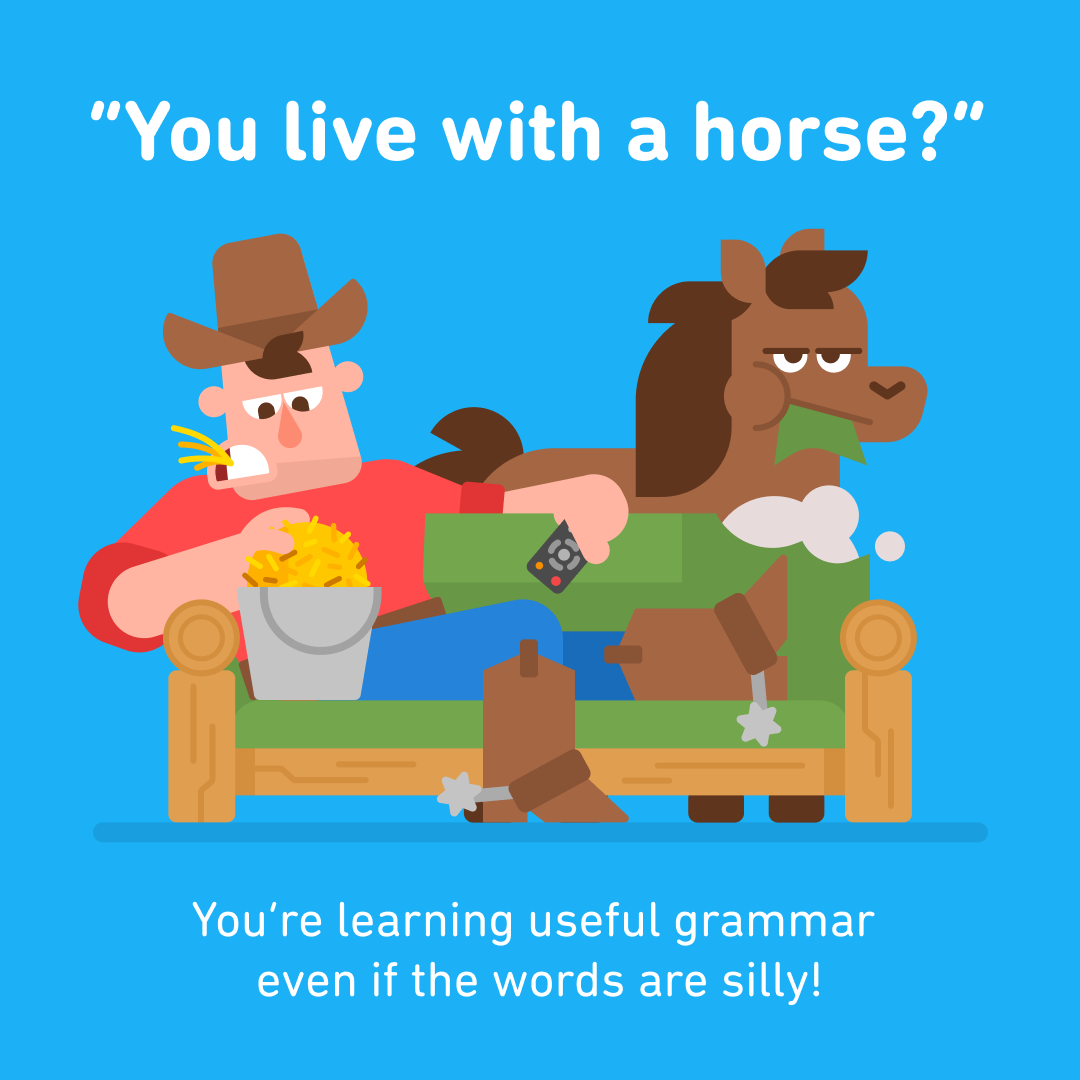
My girlfriend makes fun of the ridiculous sentences that Duo teaches. The app is not programed to teach articulate use of a language. That is not its purpose. Its function is to introduce repetition so that new language is stored in the memory.
To be effective, the app needs to do that in a way that is fun and engaging, and not overly challenging. So, they create funny characters, radio call-in shows, interactive scenarios, rewards, league tables and easy to identify progress.
There is no need to sit through hours of arduous lectures explaining concepts that are not necessary for most learners. Users are being entertained, lightly challenged and subconsciously learning.
Unless you isolate yourself entirely from this modern world, it’s highly likely you are succumbing to all of the modern conveniences that are shortening your attention span. It’s impossible to avoid.
The antidote is not found in regimented forced discipline. Instead, the secret to greater success and increased learning is found in entertainment.
If you’re not being innovative with how you learn, and how you teach, it’s almost inevitable that you and your students/team members will lose interest.
We are learning more about the human mind. Change is ours to embrace.